
Patterns Of Evolution
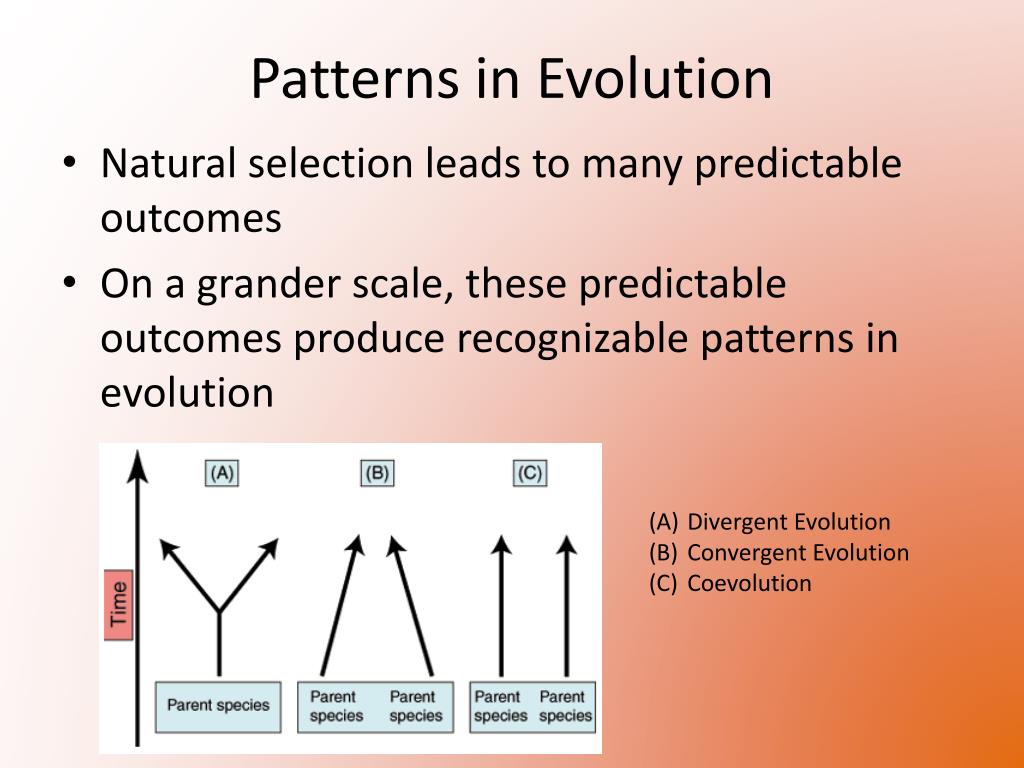
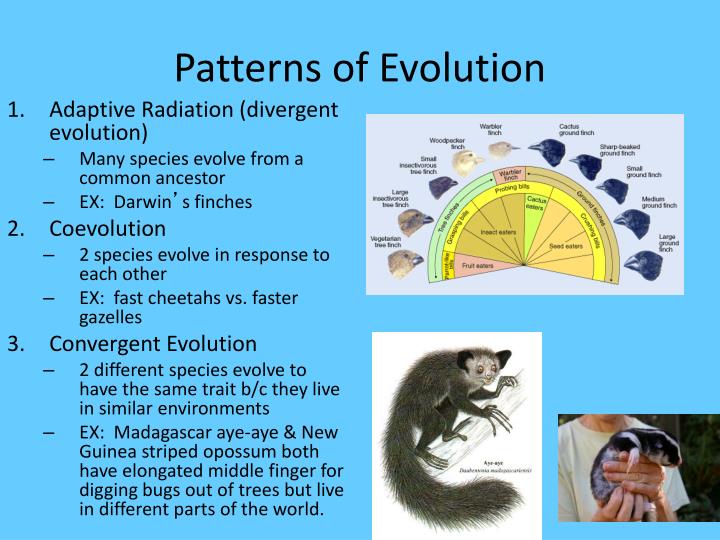
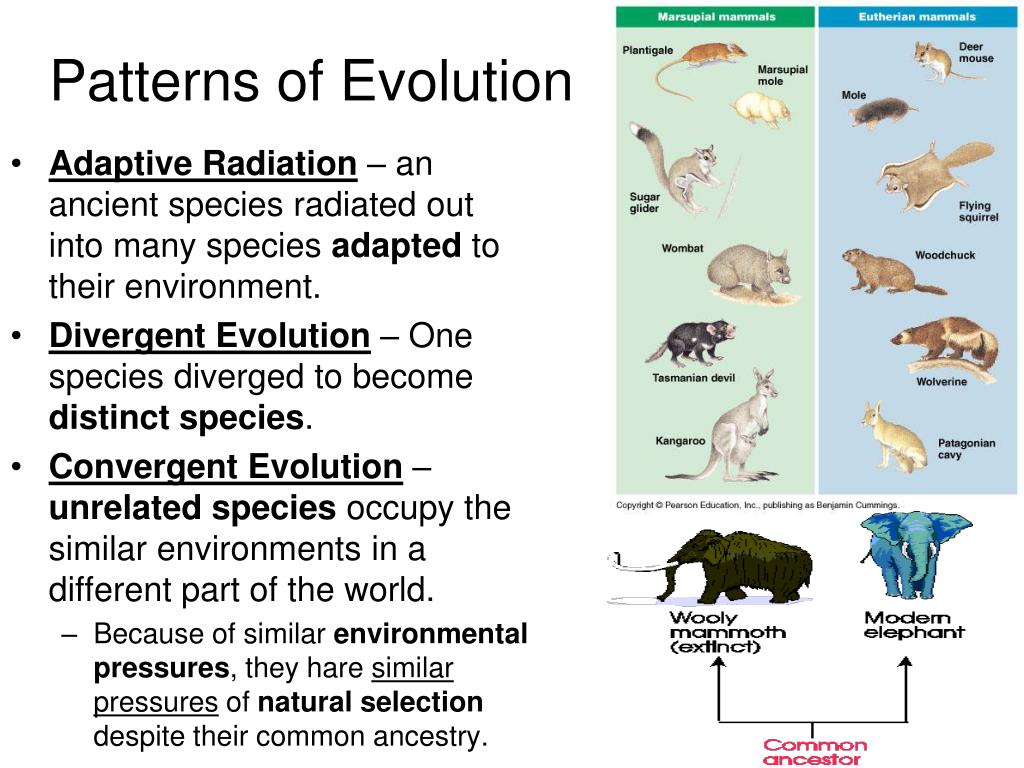
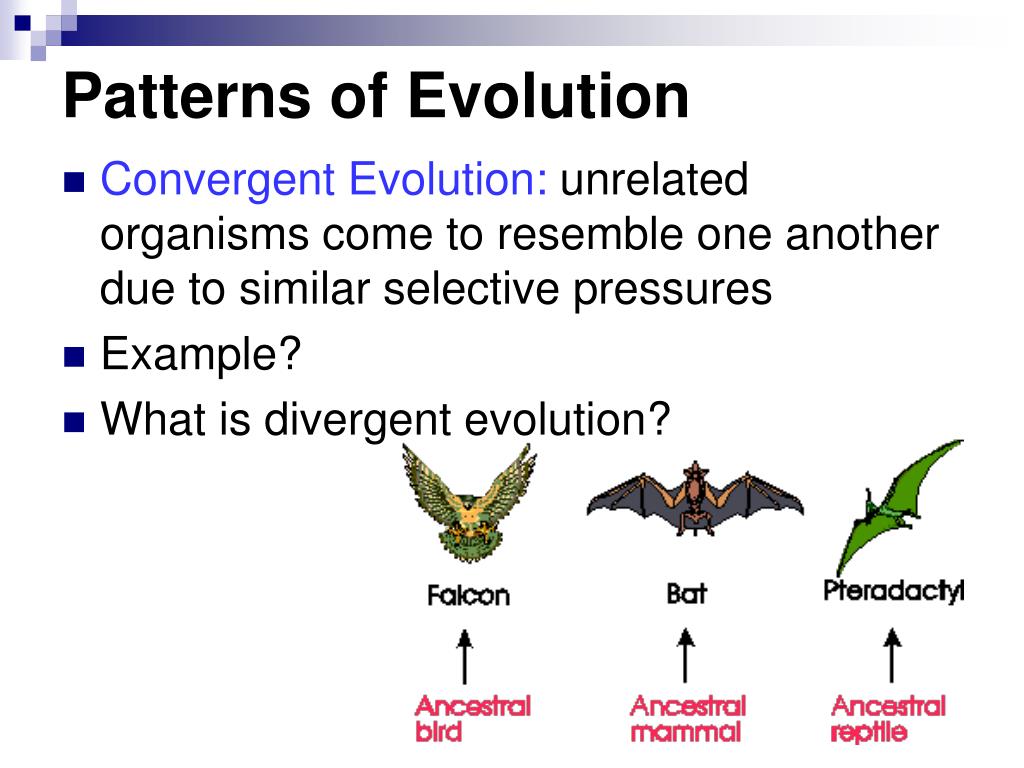
Patterns Of Evolution - Broad groups that evolved before the breakup of the supercontinent pangaea (about 200 million years ago) are distributed worldwide. Web evolution is the change in the heritable characteristics of biological populations over successive generations. Web the geographic distribution of organisms on the planet follows patterns that are best explained by evolution in conjunction with the movement of tectonic plates over geological time. When two species evolve in diverse directions from a common point, it is called divergent evolution. Importantly, these differences must have some genetic basis; We call two species that evolve in diverse directions from a common point divergent evolution. Web learn the definition and examine the types and patterns of evolution. What is evolution and how does it work? This variation, often resulting from sexual reproduction, leads to a range of traits within a population. What is evolution and how does it work? Biological populations evolve through genetic changes that correspond to changes in the organisms ' observable traits. Factors such as environment and predation pressures can have different effects on the ways in which species exposed to them evolve. This usually happens as a result of sharing similar lifestyles. Sometimes, evolution gives rise to groups of organisms that become tremendously different from each other. We can see such divergent. What is evolution and how does it work? Web these results suggest that the geographical differentiation among the populations of japanese witch hazel has contributed to the speciation process and intraspecific geographical divergence in hamamelistes aphids, and has also facilitated the evolution of the gene expression pattern and related phenotypic traits in galls. Web patterns of evolution. It occurs when evolutionary processes such as natural selection and genetic drift act on genetic variation, resulting in certain characteristics becoming more or less common within a population over successive generations. Web evolution, theory in biology postulating that the various types of plants, animals, and other living things on earth have their origin in other preexisting types and that the distinguishable differences are due to modifications in successive generations. What is evolution and how does it work? Otherwise, the selection will not lead to. Importantly, these differences must have some genetic basis; Web darwin defined evolution as descent with modification, the idea that species change over time, give rise to new species, and share a common ancestor. Web there are three main patterns of species evolution. Web evolution, theory in biology postulating that the various types of plants, animals, and other living things on earth have their origin in other preexisting types and that the distinguishable differences are due to modifications in successive generations. Divergent, convergent, and parallel evolution. Web these results suggest that the geographical differentiation among the populations of japanese witch hazel has contributed. Web you can think of patterns as “what happened when.” all of the changes, diversifications, and extinctions that happened over the course of life’s history are the patterns of macroevolution. Explore different patterns of natural selection in the study of human evolution. Web serra and his team, in collaboration with the university of dundee biologists, developed a mathematical model. This. Web you can think of patterns as “what happened when.” all of the changes, diversifications, and extinctions that happened over the course of life’s history are the patterns of macroevolution. What is evolution and how does it work? We call two species that evolve in diverse directions from a common point divergent evolution. Web evolution, theory in biology postulating that. Biological populations evolve through genetic changes that correspond to changes in the organisms ' observable traits. Here, you can explore how evolutionary change and evolutionary relationships are represented in “family trees,” how these trees are constructed, and how this knowledge affects biological classification. Evolution is responsible for both the remarkable similarities we see across all life and the amazing diversity. Sometimes, evolution gives rise to groups of organisms that become tremendously different from each other. It occurs when evolutionary processes such as natural selection and genetic drift act on genetic variation, resulting in certain characteristics becoming more or less common within a population over successive generations. Web evolution is the process where heritable traits in a group of organisms change. Web evolution is the process where heritable traits in a group of organisms change over many generations. Broad groups that evolved before the breakup of the supercontinent pangaea (about 200 million years ago) are distributed worldwide. This model successfully predicted the complex gastrulation flows—the movement of. Web you can think of patterns as “what happened when.” all of the changes,. Sometimes, evolution gives rise to groups of organisms that become tremendously different from each other. Web you can think of patterns as “what happened when.” all of the changes, diversifications, and extinctions that happened over the course of life’s history are the patterns of macroevolution. This model successfully predicted the complex gastrulation flows—the movement of. Biological populations evolve through genetic. We call two species that evolve in diverse directions from a common point divergent evolution. Divergent evolution occurs when closely related species gradually become very different. This process is made possible by genetic variation. Divergent, convergent, and parallel evolution. Web the geographic distribution of organisms on earth follows patterns that are best explained by evolution, in combination with the movement. Web evolution is defined as the change in the inherited traits of a population of organisms through successive generations. Web evolution is the process by which modern organisms have descended from ancient ancestors. Web you can think of patterns as “what happened when.” all of the changes, diversifications, and extinctions that happened over the course of life’s history are the. Biological populations evolve through genetic changes that correspond to changes in the organisms ' observable traits. This model successfully predicted the complex gastrulation flows—the movement of. When living organisms reproduce, they pass on to their progeny a collection. We call two species that evolve in diverse directions from a common point divergent evolution. We can see such divergent. Web evolution is the process by which modern organisms have descended from ancient ancestors. This usually happens as a result of sharing similar lifestyles. Web evolution over time can follow several different patterns. The mechanism that darwin proposed for evolution is natural selection. Sometimes, evolution gives rise to groups of organisms that become tremendously different from each other. Web learn the definition and examine the types and patterns of evolution. What is evolution and how does it work? Web serra and his team, in collaboration with the university of dundee biologists, developed a mathematical model. Sometimes, evolution gives rise to groups of organisms that become tremendously different from each other. Convergent evolution occurs when dissimilar species gradually become more similar. Factors such as environment and predation pressures can have different effects on the ways in which species exposed to them evolve.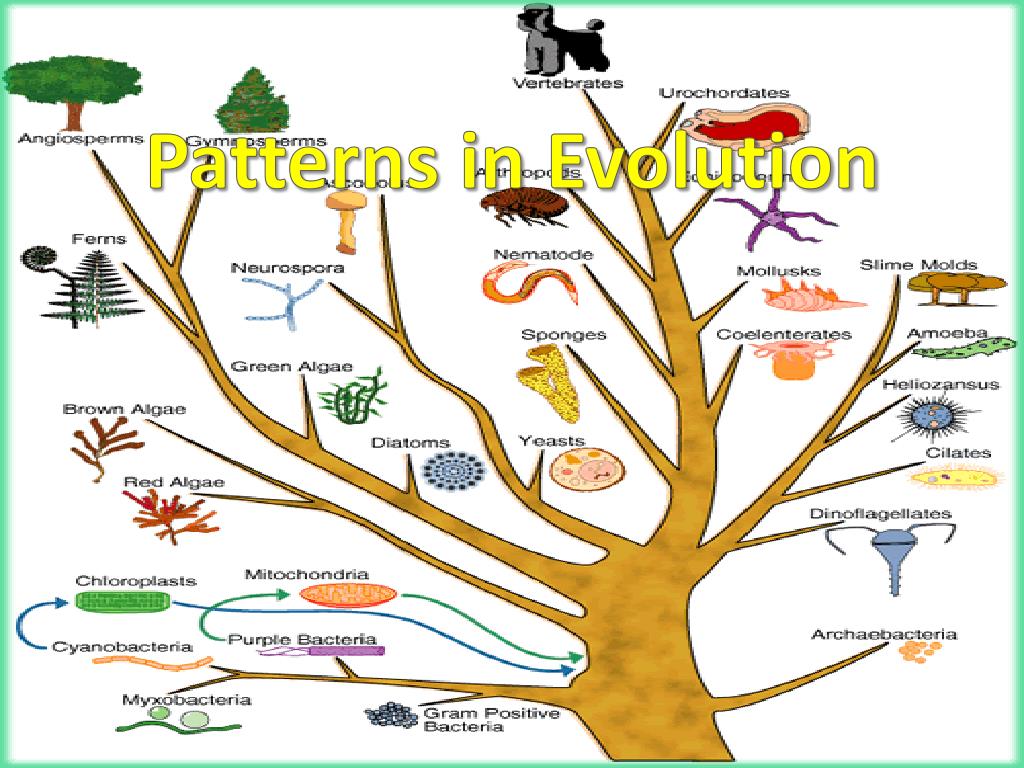
PPT Patterns in Evolution PowerPoint Presentation, free download ID
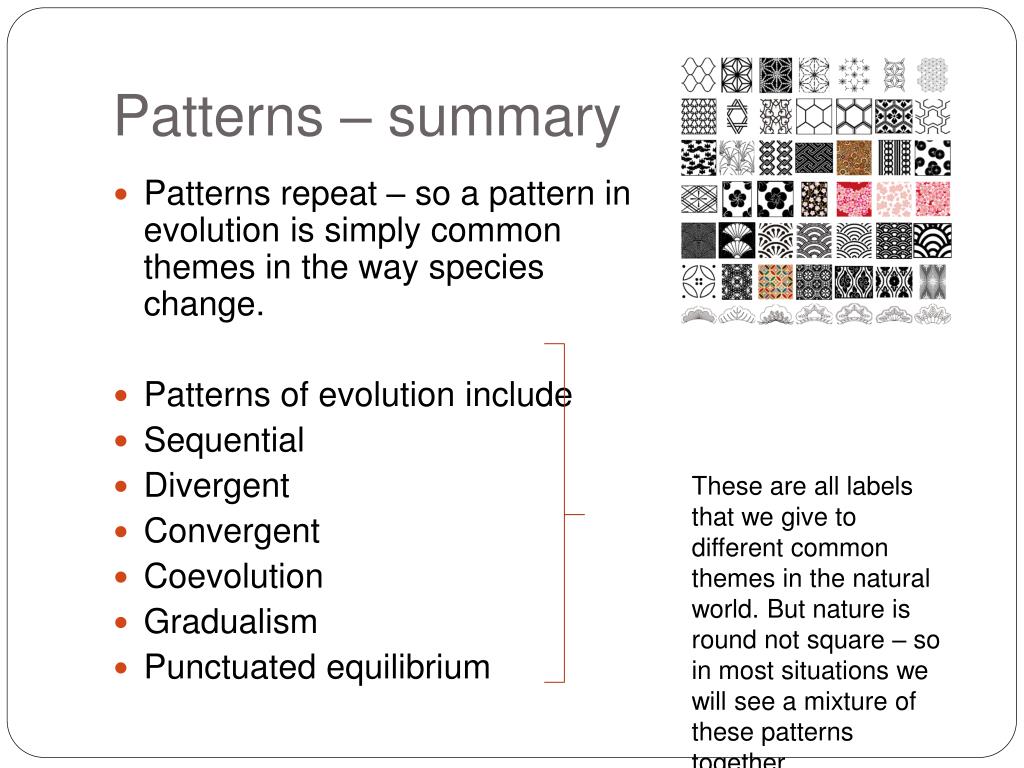
PPT Patterns of Evolution PowerPoint Presentation, free download ID

PPT MECHANISMS FOR EVOLUTION PowerPoint Presentation, free download
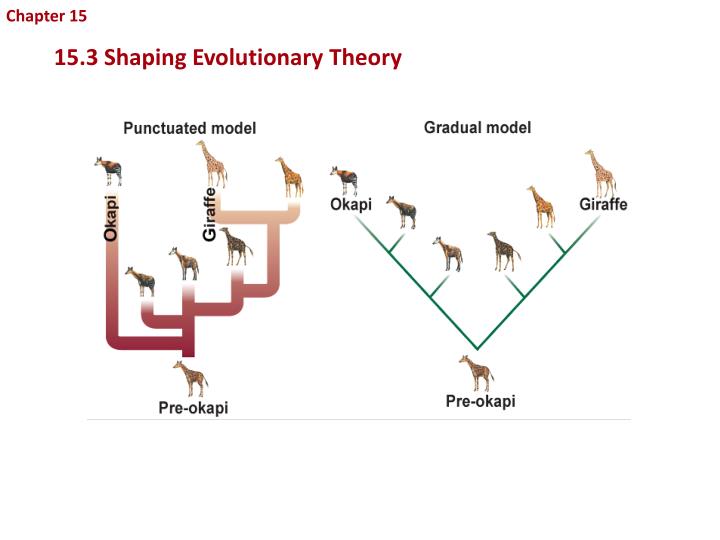
PPT 15.3 “Patterns” of Evolution PowerPoint Presentation ID2283507
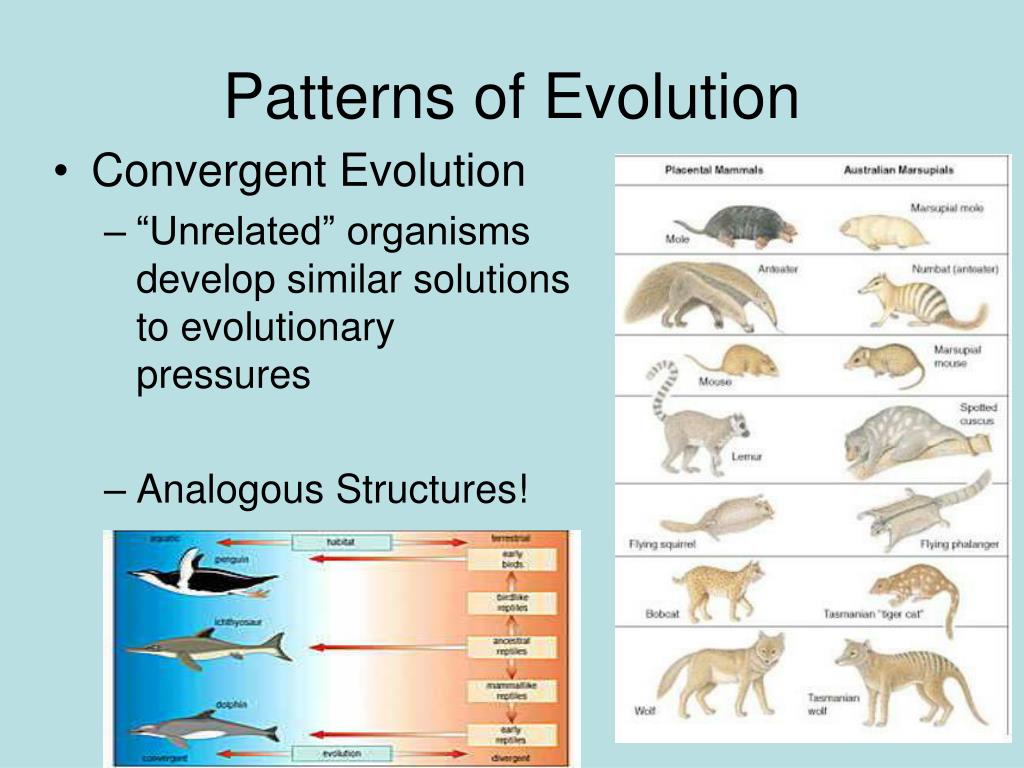
PPT Mechanisms of Evolution PowerPoint Presentation, free download
PPT Patterns of Evolution PowerPoint Presentation, free download ID
PPT EVOLUTION PowerPoint Presentation ID3076360
PPT Patterns in Evolution PowerPoint Presentation, free download ID
PPT Mechanisms of Population Evolution PowerPoint Presentation, free
PPT Evolution PowerPoint Presentation, free download ID112646
Divergent, Convergent, And Parallel Evolution.
What Is Evolution And How Does It Work?
When Two Species Evolve In Diverse Directions From A Common Point, It Is Called Divergent Evolution.
Web The Geographic Distribution Of Organisms On The Planet Follows Patterns That Are Best Explained By Evolution In Conjunction With The Movement Of Tectonic Plates Over Geological Time.
Related Post: